
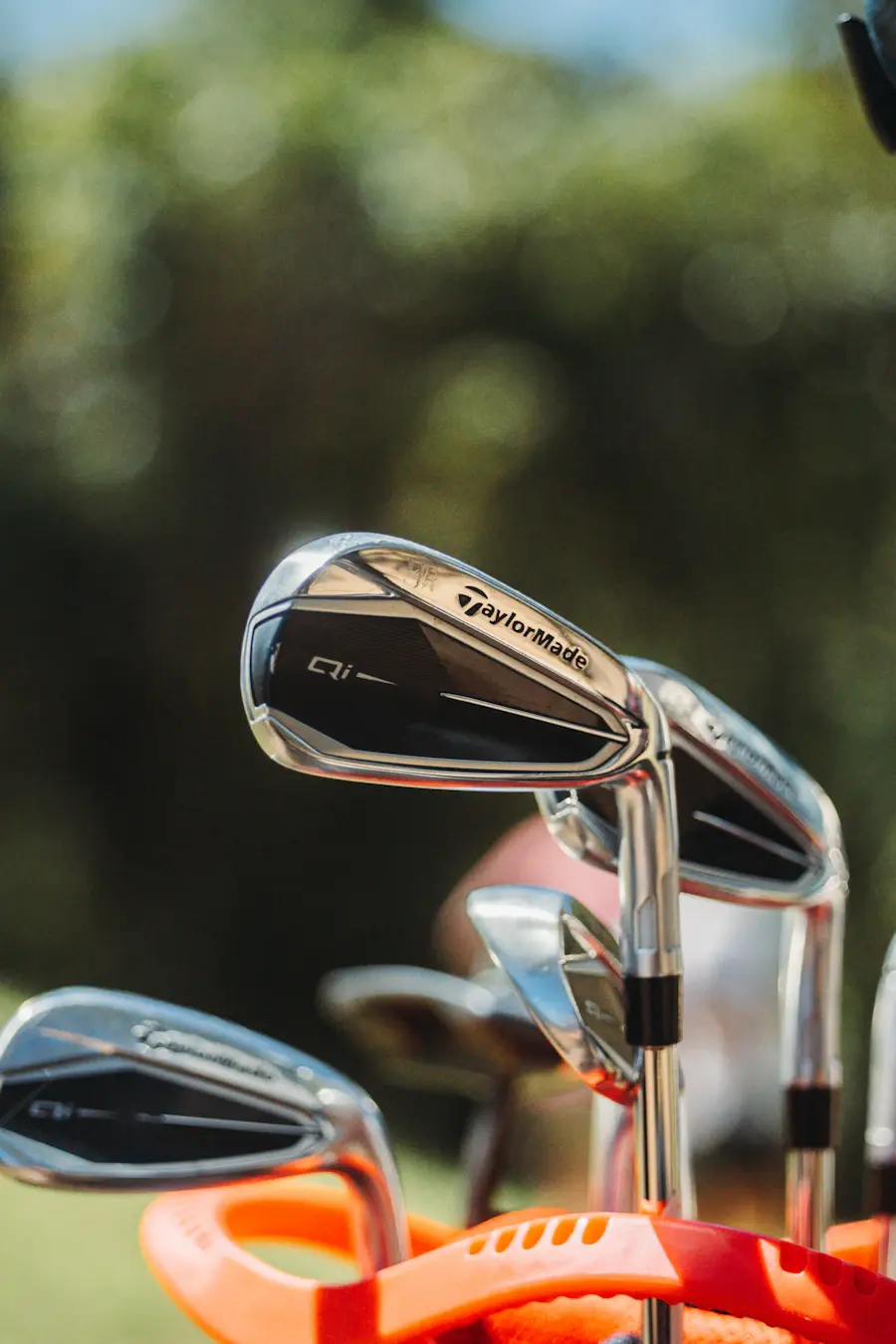
TaylorMade club fitting is not simply a matter of choosing the newest clubhead. A suitable setup must match how a golfer generates speed, makes contact and wants the ball to fly. Fitting is most useful when players understand what is being tested, which data matters and why the fitter is recommending a particular option.
Start with your current clubs and goals
The session should begin with a discussion of playing level, frequency, goals and any movement limitations the golfer chooses to share. The fitter may inspect the current clubs to establish a baseline. For a driver, the goal may be to reduce dispersion; for irons, it may be distance control and landing angle; for wedges, the focus is often on short-game distance and control.
Understand the key measurements
Club speed and ball speed indicate how energy is transferred to the ball. Launch angle and spin affect height, flight time and distance. Dispersion shows how consistently shots group horizontally and vertically. Shaft flex, weight, length, loft, lie angle and clubhead feel should be considered alongside the data. Avoid changing many variables at once, or it becomes difficult to identify what caused the difference.
Choose consistency, not a single best shot
Hit several shots with your normal tempo and compare average results. A setup that produces one very long shot but a wide dispersion may not be the best choice on the course. Ask the fitter to explain the strengths and trade-offs of each option, save the specifications and make a decision only when you understand which goal the recommended setup is intended to support.